A Global Design System
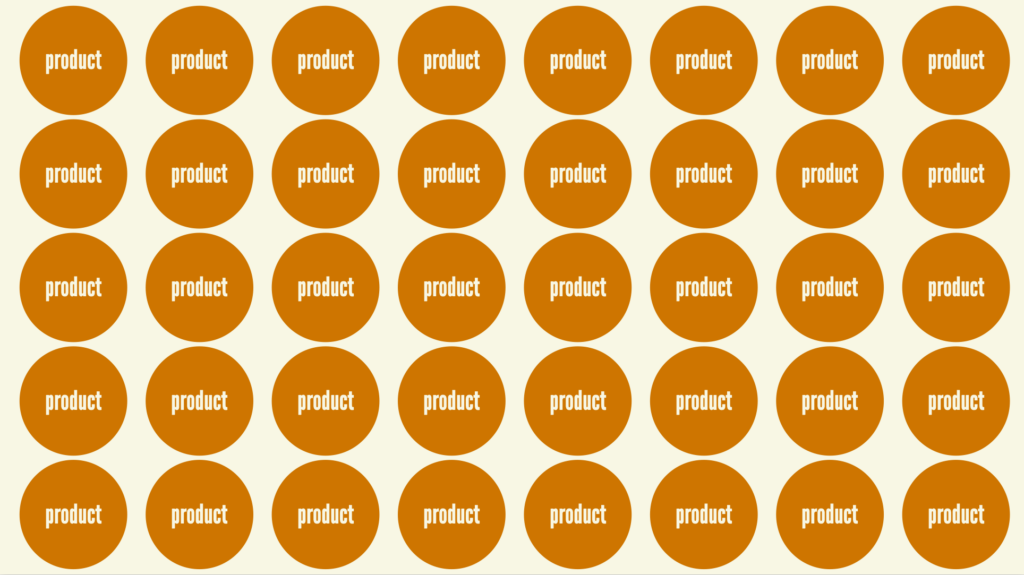
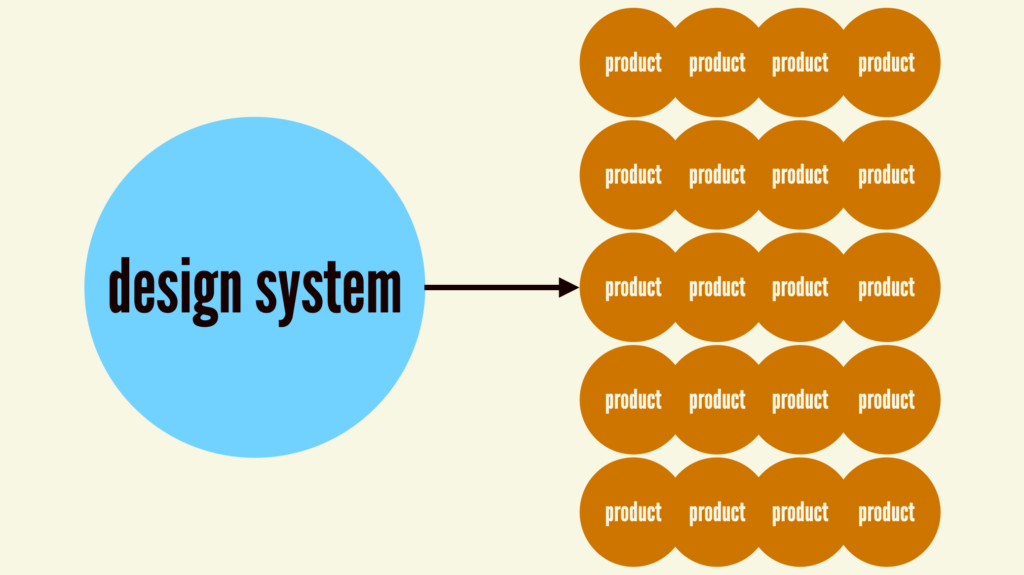
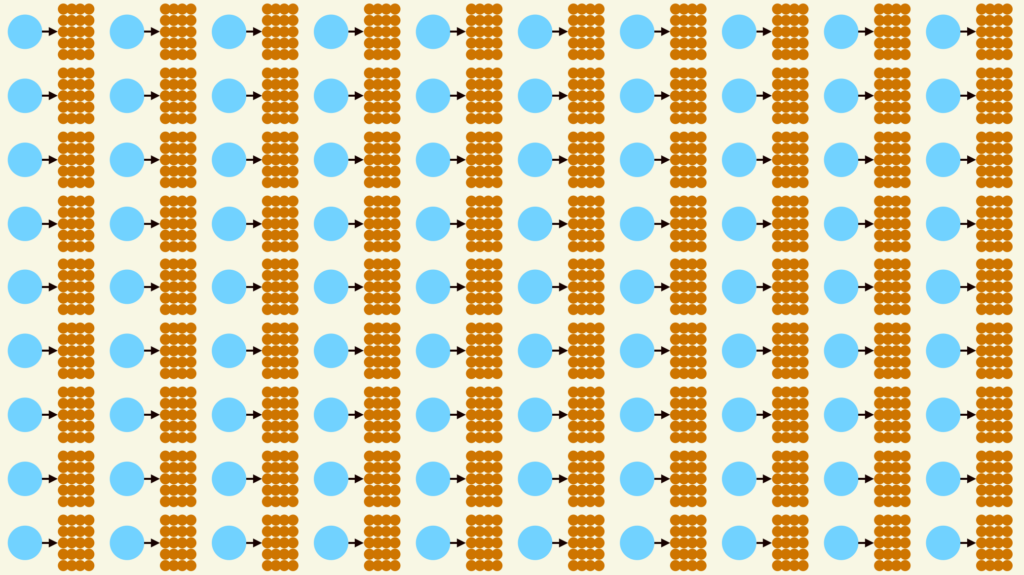
Brad Frost A Global Design SystemTL;DR: This is a call to action to create a Global Design System that provides the world's web designers & developers a library of common UI components. A Global Design System would improve the quality and accessibility of the world's web experiences, save the world's web designers and developers millions of hours, and make better use of our collective human potential. Sounds pretty good, right? In this article, I'll talk about our collective design system journey, the rationale for creating a Global Design System, some thoughts on how to make a Global Design System actually happen, and discuss how a Global Design System would impact the world's web designers and developers. Let's dig in! Our design systems journey Once upon a time, people had to design, construct, and maintain a bespoke user interface for each and every web digital product. This was manageable when an organization's digital landscape looked something like this: 
Across the top one million home pages, 49,991,225 distinct accessibility errors were detected—an average of 50.0 errors per page. WebAIM Million
While these issues can't solely be attributed to the constant reinvention of common UI components, they certainly contribute to the problem! Historically our approach to this important issue has been to shout louder at developers to construct things with accessibility as a primary consideration, but that strategy doesn't appear to be working. All of this duplicative work yields experiences that still suffer serious quality deficiencies, and there are even more wrinkles to consider. Each design system is isolated and disconnected , which means each organization is left to its own devices to ensure the library keeps up with the web's ever-evolving best practices. Updating components to adopt new HTML elements, attributes, and techniques has so far been a manual process that is delicate and error-prone. And it's a two-way street: there's not a clear path for the broader web to benefit from excellent solutions and ideas that were born in org-specific systems. So what are we to do? Let's return to our wise design systems rallying cry: "Let's stop reinventing the wheel! Let's save designers and developers time and agony! Let's promote consistency and cohesion! Let's ship higher-quality users interfaces!" Only now let's redirect that rallying cry outside of any individual organizations' walls and apply it to the world at large. A proposal for a Global Design System
When the design system is boring, it frees designers and developers to do the new stuff, to solve new problems. The design system carries the burden of the boring, so that designers and developers don’t have to. Josh Clark
There is a massive opportunity to save the world's designers and developers millions upon millions of hours, freeing up time and human potential to work on far more pressing problems than making an accordion open and close. There's a massive opportunity to dramatically improve the accessibility, semantics, and overall quality of the world's web experiences. There's a massive opportunity to harness the collective brain power of the world's best and brightest. There's a massive opportunity for the web community to demonstrate to a volatile world what true worldwide collaboration and cooperation looks like. I think there's a massive opportunity to create a Global Design System. 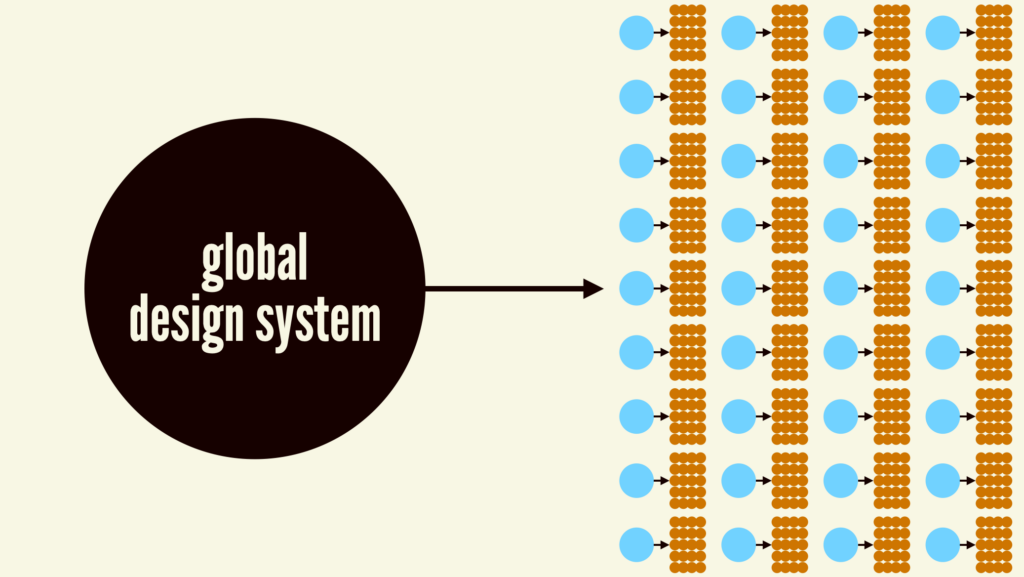

- These solutions were (understandably!) created with a specific organization's specific goals & considerations in mind. The architecture, conventions, and priorities of these libraries are tuned to the organization it serves; they don't take into account the sheer breadth of the world's UI use cases.
- They nearly always come with a specific default aesthetic. If you adopt Material Design, for example, your products will look like Google's products. These libraries can be configurable, which is great, but themeabilitiy has limits and often results in many teams fighting the default look-and-feel to achieve custom results. In our experience, this is where folks end up creating a big mess.
Projects like Headless UI and react-aria provide primitive UI components and functionality without a default look and feel. This is what we're shooting for! We want the common structure and functionality that third-party components provide, but we often want to bring our own styles to the party. However, many of these libraries are tied to a specific technology, namely React, which limits their reach. So while existing libraries are great, they come with a default look and feel that have limits to their customizability. And while headless UI libraries capture the right spirit, they're tethered to specific libraries or frameworks. What we need is a library of aesthetic-and-technology-agnostic UI components that provides sturdy semantics and functionality while also providing a ton of aesthetic flexibility. Making a Global Design System happen Here's where the rubber meets the road. What does this look like? How would all of this go down? Who would be involved? Where would this live? When should this happen? The answers to these questions require a lot of conversation, collaboration, and coordination amongst a diverse, yet-to-be-determined set of stakeholders. I don't pretend to know exactly how to turn this idea into a reality, and I'd very much welcome ideas and conversation about how to make it happen! With that caveat, I'd like to share a few ideas that could be helpful. What would a Global Design system be? A Global Design System would be a common library containing common UI components currentlyfound in most design systems (Shout out to the brilliant Open UI project for this epic matrix!). In order to be successful, these components would need to be:
- Vehicles for accessibility and other front-end best practices , creating a single source of truth for common UI components.
- Easily themeable in order to match any brand or design language.
- Intuitive to use, providing users with a cohesive & consistent API language, sensible structure, and grokkable syntax.
- Interoperable to be able to power any website or app.
- Beinternationalized in order to account for the sheer diversity of languages, writing modes, et al. found throughout the world.
- Be composable and extensible so users can modify or extend the system without having to hack things to pieces.
Given the above principles, I think it would make sense for the Global Design System to be a library of Web Components. Web Components are part of the web platform and are interoperable (in theory at least) with any web-based tech stack. Setting aside current weirdness with Web Components (that's a post for another day), they seem like a sensible technology choice for an initiative like this. Web Components for a Global Design System could look something along the lines of these examples:
Your credit card is expired. Please update your information.
Log In Cancel
For all you literal people out there, take all of this with a grain of salt. I'm not proposing this exact syntax or structure; take this as a "for instance" gesture sketch. A Global Design System would exist as a standalone library of components that consumers would pull into their projects, style to match their brand/visual language, and integrate into their application's business logic. Not only would this be far more efficient than having to design, build, test, deploy, and integrate bespoke components from scratch, a Global Design System would give teams added confidence that the components are sturdy and reliable. Of course it would also make sense to create a corollary UI library in Figma and other design tools that share the same API, structure, conventions, and default appearance as the Global Design System code library. And of course there would need to be solid reference documentation for this library, which would take the burden away from each and every design system team on the planet to define and describe what a freaking button is. And while we're at it, it likely makes sense to consider native mobile and desktop operating systems as well; while these environments differ in important ways, there are also many shared conventions that a Global Design System can help define or inform. What wouldn't a Global Design System be? I think there are a few special callouts for what a global design system wouldn't be. A Global Design System wouldn't:
- Provide a particular aesthetic - Think of this as a vanilla base containing only browser-default styles. People can create their own custom themes or use styles contained in Tailwind, Open Props, Bootstrap, Material, et al. In our experience working with scores of different design systems, common components have a shared general semantics and behavior, but are styled dramatically different. Think Global Design System + CSS Zen Garden.
- Be a comprehensive solution for all UI needs - It's impossible to account for every use case on the planet. Think pragmatism and the 80/20 rule here. If the Global Design System could provide solutions for the majority of use cases for a given component, that would be a huge win! But what if you have a need to make a custom SVG starburst button that does a backflip when you click on it? That's fine! We still have the ability to make our own special pieces of UI the old-fashioned way. This is also why a layer on top of HTML might be a better approach than extending HTML itself; HTML has to account for all use cases, where a Web Component library can limit itself to the most common use cases. It would be critical for the library itself to be quite conservative and focus on extremely common use cases or else it would buckle under its own weight and endless requests from the peanut gallery. Governance would be key!
Who I tend to define a design system as the official story of how an organization builds user interfaces. A design system needs to be tuned for the specific digital product landscape that exists at an organization in order for it to be successful. But the organization we're talking about here is this: 
The World Wide Web Consortium (W3C) develops standards and guidelines to help everyone build a web based on the principles of accessibility, internationalization, privacy and security.
It's also worth mentioning the amazing Open UI project, which has been doing a lot of the hard legwork on rounding up common UI components across many popular design systems. And I have no doubt there are many other organizations, projects, and people from the design system community who would love to participate in an effort like this. Where A Global Design System would need to consist of a set of assets that include:
- A code repository containing the source code for the Web Components
- Any necessary code packages (npm, yarn, composer) to deliver the Web Components to any environment. (Note: reliance on JS, packages, etc is something to address in order to create components that can be easily used by any web environment. This post by Lea Verou captures how the modern landscape creates barriers for people to create/use Web Components)
- A design library in popular design tools like Figma and Sketch.
- A reference website to provide documentation and information about the project.
Where exactly those things would live is determinant on a whole slew of factors, so we can leave it here for now. How As mentioned before, I have no idea how exactly this would all go down. I'd figure it would require a lot of conversation, alignment, and coordination before anything tangible could happen. Here's my hand-wavy stab at a process from my naive outsider perspective:
- Have conversations with any interested party, including: standards bodies, relevant existing groups, design system teams, individual designers & developers, etc to get some momentum going.
- Probably create aworking group or similar to start moving forward in a more formal way.
- Do research to better understand what common UI components and variants should exist in a Global Design System. Have conversations with and learn from popular design system teams and popular UI library maintainers. Talk to product designers and web developers to better learn what their pain points are and learn what they'd like to see in a Global Design System. Involve experts in accessibility, semantics, internationalization, and other relevant specialists to ensure a Global Design System embodies best practices. Sync with Open UI to see how this overlaps with their existing work. Study existing design systems. Conduct an interface inventory across the web to capture a cross-section of in-the-wild use cases.
- Lay out a plan of attack to build a Global Design System library. Define what exactly it is, align on technology choices, establish architecture, align on naming conventions, etc. Establish a roadmap for creating and delivering the Global Design System components. Figure out who's doing what, and so on.
- Design and build - This is the easy part 😂. Design, build, document common UI components according to the architectural conventions. Test alpha/beta releases with guinea pigs.
- Release - Make the Global Design System components available to use; get everyone in the web community to evangelize, and get prominent design systems and projects to adopt the new library.
- Iterate - Add new components and variants to the library according to the roadmap. Get feedback, etc.
- Govern - A core group would of course need to govern the design system on an ongoing basis to address issues, field requests, protect the system's integrity, and so on. This would obviously be a tough gig considering the global nature of the project, but I'd imagine it would be fulfilling in the same ways that working on big globe-spanning projects are.
Something like that. Again, my perspective is naive so take all of this with a grain of salt. For now, let's at least get the conversation part started! When I've had the opportunity to speak about this topic at several conferences, and I've thoroughly enjoyed the subsequent discussion about the prospects of a Global Design System. The number of "I've been saying this for years!" and "you have my sword!" responses leads me to believe there's a strong appetite for a Global Design System. People are hungry for this to happen, the technologies are now largely in place, and the whole industry has a far better understanding of component-driven design and development. I think the time for a Global Design System is now.
What would this mean for the world's web designers and developers? I think that a Global Design System has the potential to transform how web designers and developers do their jobs. When I talk about design systems, I often talk about respect and human potential. Every design system team having to build their own common components isn't a respectful use of their time and potential. Lord knows there are some wicked problems to solve, so let's free our hands and brains up to work on those problems instead! If a Global Design System existed, what would design system teams do? While I understand anxiety around being replaced (hey, we hear this about design systems from product designers & developers all the time), there's still plenty of work to do. I find this tremendously exciting: design system teams would be freed up to focus on more interesting aspects of creating great digital products than simply component construction. Plenty of the current work would remain:
- Crafting a design language - The design system team would continue to be responsible for the applying the brand’s application to digital product as a thoughtful design language.
- Documenting guidelines for specific use and context of components within the organization would still need to
But there would also be a huge opportunity to free teams up to focus on bigger-picture issues. In our work at Big Medium, we help our clients with the human, process, product-level, and organization-level aspects of design systems. This is the stuff that truly makes or breaks a design system effort, but too often gets lost in the ground-level work of component production. With a Global Design System in place, teams could:
- Architect and orchestrate a thoughtfuldesign system ecosystem that helps the organization ship better products faster, realizing the value of a design system.
- Collaborate with production teams to create and curate high-value product-specific design patterns, on top of the common UI.
- Create smart components that are wired up and ready to integrate into product codebases.
- Build new automation tools (hello, AI!) to scaffold designs, code, and tests quickly.
- Use the design system to bust barriers between disciplines , especially between design and development. A Global Design System can help these world's get closer together, but
- Help consuming teams make great UX and development decisions with common and org-specific components.
- Capture, curate, and celebrate the organization's standards , best practices, and innovations.
Freed from much of the mechanical production work, design system teams can spend more time on the stuff that is truly unique to the organization. There's still a ton of work to do, and that remaining work makes better use of our human intellect. What's next? That's a damn good question! How to transition from "A Global Design System seems like a good idea" into "let's do this!" is a big question mark. So I'll pose the question to you: what's next? What do you think about the idea of having a Global Design System? Good idea? Bad idea? What would you like to see in a Global Design System? How do you envision it all going down? I believe in the web. There have been many weird twists and turns over the years, but the idealistic embers of the World Wide Web are still burning. I want the web to thrive, and I want people working to build the web to thrive and realize their potential as human beings. I bet you feel the same way. So let's make a Global Design System happen together!