Accessibility and Low-Powered Devices
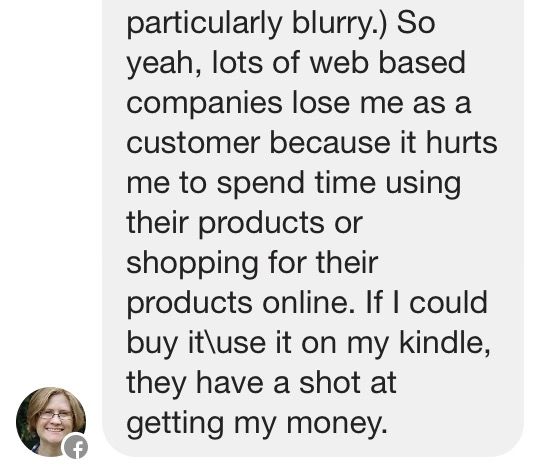
Brad Frost Accessibility and Low-Powered DevicesMy wife's cousin suffers from debilitating migraines. She's done everything to reduce the migraines' frequency, from dramatically altering her diet, to trying every available medical treatment, to even moving several times to different climates. Because of her condition, she has to minimize time spent with backlit screens. Recently she sent me a Facebook message: 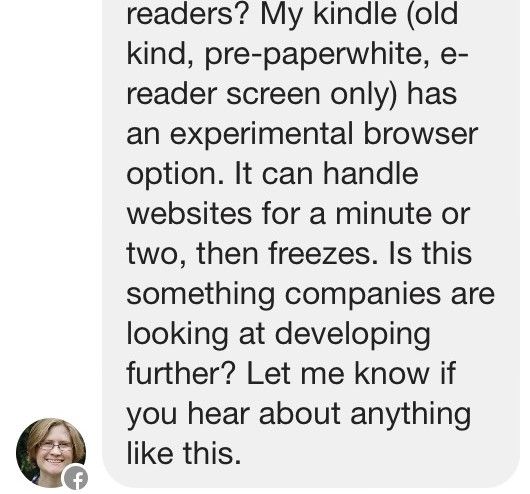
- She's a user who owns more powerful devices (she has a Mac, etc) but is deliberately choosing to browse the Web on an underpowered device because of her circumstances.
- Does this mean Web designers need to bend over backwards to ensure their creations are looking and functioning beautifully on old e-ink Kindles? No. This has to do with awareness of the fact that people have to–or even choose to–access the Web from less-than-optimal environments.
- There is a difference between "support" and "optimization". I'd venture to guess old e-ink Kindle's aren't explicitly mentioned on any project's browser support list. But these lists are really referring to what browsers/devices/environments the creators are optimizing for. It's our jobs as Web creators to make experiences to do our best to support any person who wants to interact with our creations, regardless of what device/browser/environment they have. This is about pragmatism. Ideally we create things that work everywhere, but realistically there's not enough time and money to actually deliver that ideal experience. That doesn't mean we shouldn't try.
- Hopefully device manufacturers develop (or maybe they've already been developed?) more powerful e-readers with more sophisticated browsers that won't choke whenever it encounters the average web page. But that's not really the point. The zombie apocalypse of devices is already here and the trajectory shows folks continuing to interact with the Web on underpowered devices. Watching people browse the Web from their watch is fascinating because these are modern (hip) devices that also happen to be relatively underpowered.
- Performance matters, and performance and accessibility are closely related. This reminds me of the amazing Youtube Feather story, where a lightweight prototype led to more people being able to access Youtube's videos.
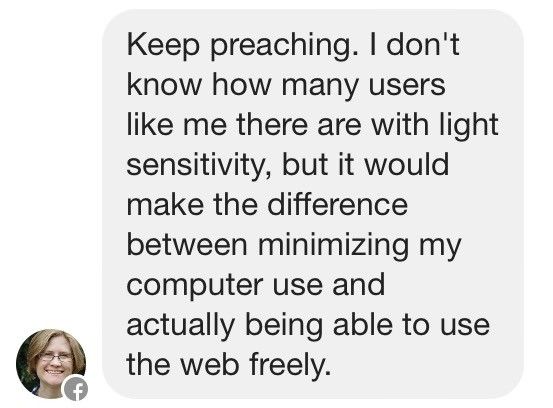
- Thankfully, both accessibility and performance map nicely to business goals. When I ask clients "Do you want to reach more customers?" the answer is always yes. When I ask them "Do you want your experience to load blazingly fast?" the answer is always yes. Both accessibility and performance are invisible aspects of an experience and should be considered even if they aren't explicit goals of the project. My wife's cousin explains it best: