Concurrent
Brad Frost ConcurrentOur eyes are amazingly complex systems, so naturally they've been a favorite topic for evolutionary biologists and other scientists for quite some time. Our eyes produce multiple visual systems that give our brains information that help us interpret our surroundings. The first visual system is central (foveal) vision, where the cone-packed fovea provides our brain with detailed information focus in our field of vision. The second system is our peripheral vision which provides information about the areas outside our center of vision. Even though that information isn't as high-fidelity as our foveal system, it still provides our brain with a wealth of valuable information (like motion) that continues to help keep us alive. 
- Screens – Designing for the multi-device Web has been our reality for a while now, and that means we have to consider small screens, large screens and everything in between. Designing a glorious desktop experience and figuring out after-the-fact how to cram it all down for smaller screens obviously doesn't make sense, and taking "mobile-first" too literally ends up leaving large screens wanting. I've found that by trying to solve for all screens with an initial focus on the small screen has worked out well for me.
- Interface systems – It's increasingly important to design robust interface design systems. While atomic design and other modular systems are effective, there's a misconception that you must finish the smaller pieces first before putting the rest together. But doing this can easily lead to a disjointed, patchwork experience. In order to craft an effective system, it's essential to simultaneously consider both the part and the whole of the interface.
- Web environments – The environments for which we're designing are increasingly varied. We're sending our Web experiences to basic environments (small screens, slow networks, crappy hardware, etc), advanced environments (Retina screens, fast pipes, the latest hardware, etc), and everything in between. While it's temping to focus exclusively on the bleeding edge, it's increasingly essential to create resilient experiences that reach as many people as possible. There's a misconception that creating a "basic" and "advanced" version of an experience is a total duplication of effort, which is entirely false. By practicing sound techniques, we can simultaneously support as many environments as possible while still optimizing for the best.
- Skillset – It's no secret that keeping up with the absolutely insane pace of technology and all the advancements in our industry is freaking exhausting. I'm consistently tempted to sit in my comfort zone and blissfully ignore other aspects of our industry. But I know that would only lead to disaster. The concept of the "T"-shaped skill set is one that I feel is increasingly important. In order to be better at what I do, I'll need to have a decent (but not expert) understanding of most aspects of design, development, business, marketing, psychology, and a whole lot more.
- Product strategy – Now that I'm working on a product (still too early to talk about), I'm amazed at how much needs considered simultaneously. How do you simultaneously work at getting something out the door (an MVP) while simultaneously making decisions that will affect the product (and ultimately my life) in the long run.
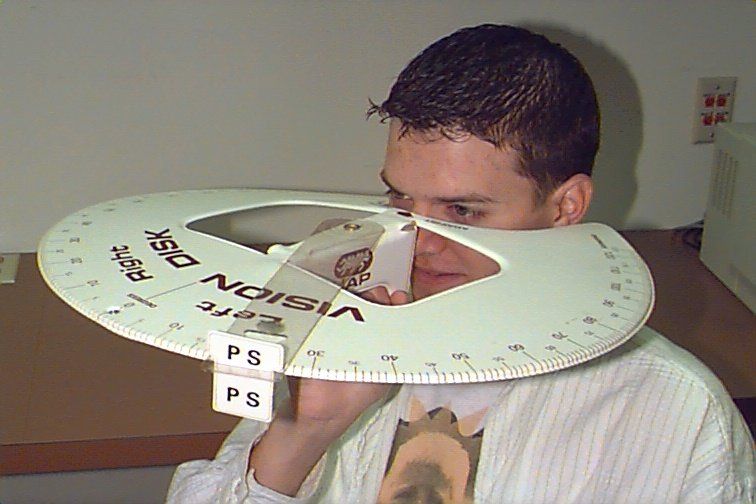
Now, it's impossible to make everything a priority. We'll always choose a focal point, just as our eyes do. But there's a difference between focus and horse blinders. It may feel like being more considerate up front will complicate even the simplest decisions, but by considering more at the time of decision-making, you're able to arrive at better solutions save yourself a whole lot of hassle down the line. So utilize your peripheral vision. Like this guy: [caption id="attachment_7830" align="alignnone" width="756"]