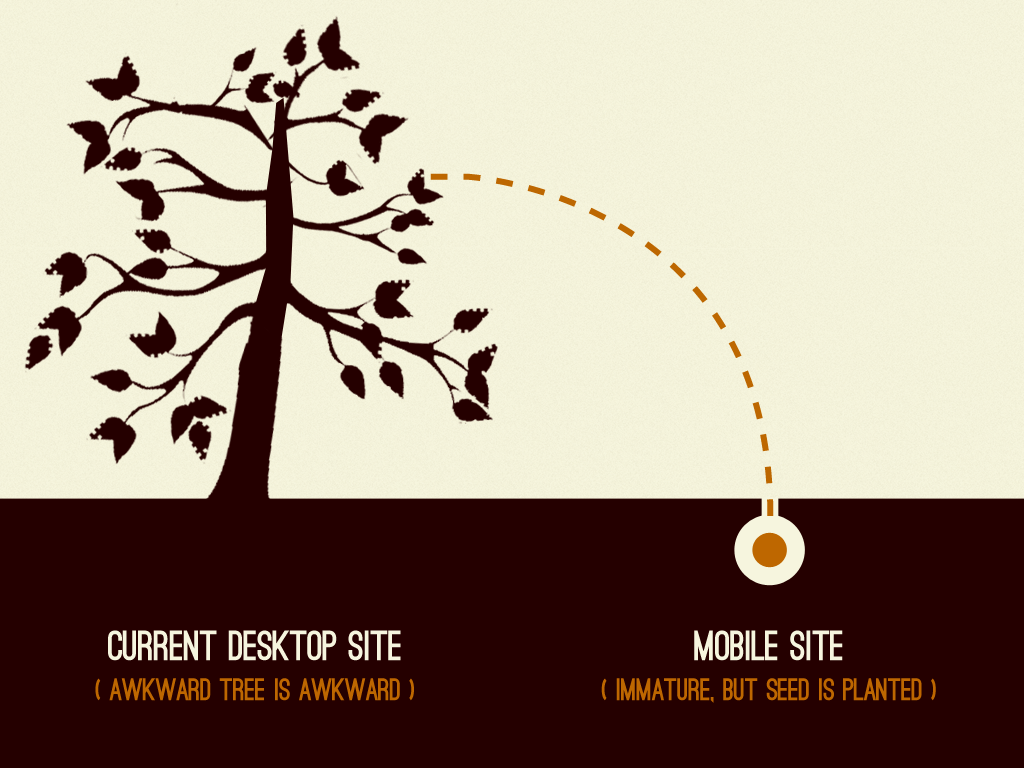
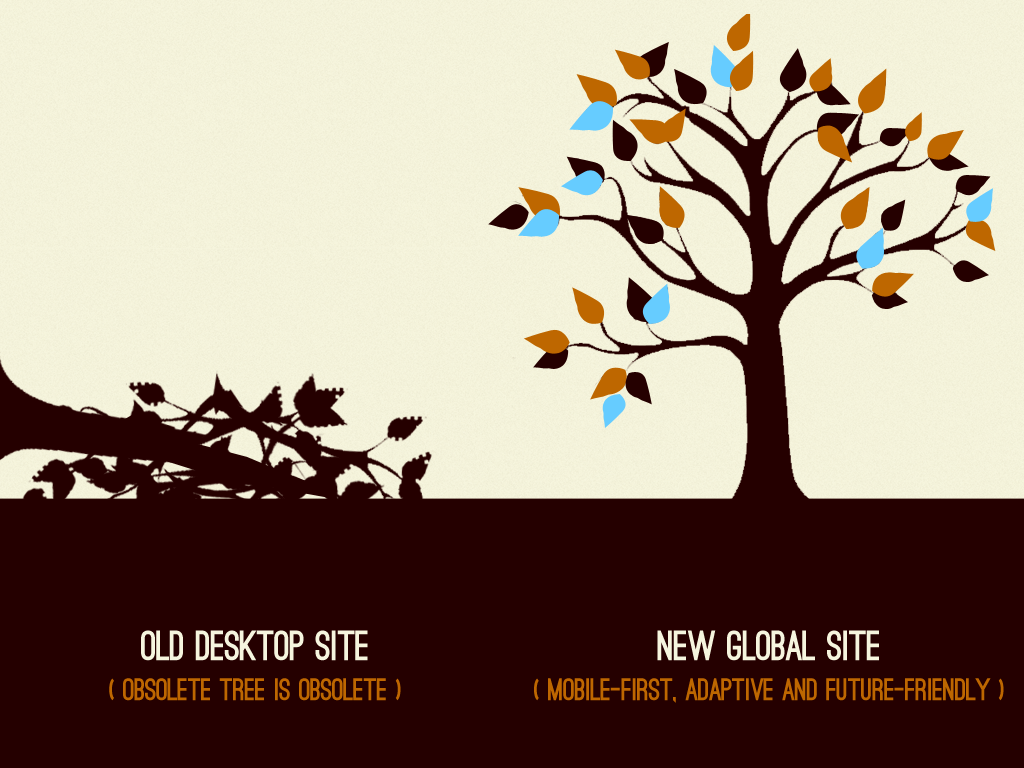
Stephanie Rieger has a beautiful post called Responsive Is a Characteristic, which is a fantastic reminder that responsiveness should be an important component of any project, even if it's not a full-blown, certified-organic responsive experience. This is what I tend to call "planting the seed" for more adaptive experiences. Here's the gist: [caption id="attachment_2900" align="alignnone" width="650" caption="Mobile provides an opportunity to plant the seed to grow out of your legacy site/mentality"][/caption] [caption id="attachment_2905" align="alignnone" width="650" caption="With time and effort, the legacy site can be removed and a mobile-first, adaptive, future friendly experience remains"][/caption] The basic idea is that a creating a separate mobile experience can actually be a blessing in disguise. It gives you time to re-evaluate, prioritize, strip down and focus on what's really important. And like Stephanie says, this process eventually changes the way you think about your content, infrastructure, user experience and approach. Slowly but surely investing in your mobile experience can provide an opportunity to eventually shed the dead weight of your existing experience and into a new mobile-first adaptive experience. Kristopher Layon (@klayon) wrote a wonderful book called Mobilizing Web Sites: Strategies for Mobile Web Implementation that talks about what you can do to plant the seeds for more mobile-friendly experiences. What I love about the book is how he reminds us over and over again that we don't have to wait for the "perfect opportunity" (they don't exist) to optimize your project for mobile. There are plenty of things we can do now to chip away at it, all while planting the seeds to become permanently adaptive. You don't have to wait to start implementing more responsive solutions. It doesn't have to be in the project brief or come as a demand from your boss. Just do what you can to create things as flexibility as possible and be as considerate of the plethora of today and tomorrow's web-enabled devices. Here's the presentation where the 'planting the seeds' images came from: